🇺🇸 Veteran-Owned & Operated: Integrity You Can Trust
📍 Experts in Fencing on Pittsburgh’s Hills & Slopes
📅 Free On-Site Consultation – Honest Pricing, No Pressure
🚛 Daily Installs in Bethel Park, Washington & Coraopolis
🛠️ Custom Stick-Built Fencing: No Pre-Made Panels!
✨ Maintenance-Free Vinyl: Never Paint or Stain Again!
🪜 Secure Handrails: Safety for Your Porch & Stairs
❄️ Built Tough to Withstand PA Winters & High Winds
🇺🇸 Veteran-Owned & Operated: Integrity You Can Trust
📍 Experts in Fencing on Pittsburgh’s Hills & Slopes
📅 Free On-Site Consultation – Honest Pricing, No Pressure
🚛 Daily Installs in Bethel Park, Washington & Coraopolis
🛠️ Custom Stick-Built Fencing: No Pre-Made Panels!
✨ Maintenance-Free Vinyl: Never Paint or Stain Again!
🪜 Secure Handrails: Safety for Your Porch & Stairs
❄️ Built Tough to Withstand PA Winters & High Winds
🇺🇸 Veteran-Owned & Operated: Integrity You Can Trust
📍 Experts in Fencing on Pittsburgh’s Hills & Slopes
📅 Free On-Site Consultation – Honest Pricing, No Pressure
🚛 Daily Installs in Bethel Park, Washington & Coraopolis
🛠️ Custom Stick-Built Fencing: No Pre-Made Panels!
✨ Maintenance-Free Vinyl: Never Paint or Stain Again!
🪜 Secure Handrails: Safety for Your Porch & Stairs
❄️ Built Tough to Withstand PA Winters & High Winds
🇺🇸 Veteran-Owned & Operated: Integrity You Can Trust
📍 Experts in Fencing on Pittsburgh’s Hills & Slopes
📅 Free On-Site Consultation – Honest Pricing, No Pressure
🚛 Daily Installs in Bethel Park, Washington & Coraopolis
🛠️ Custom Stick-Built Fencing: No Pre-Made Panels!
✨ Maintenance-Free Vinyl: Never Paint or Stain Again!
🪜 Secure Handrails: Safety for Your Porch & Stairs
❄️ Built Tough to Withstand PA Winters & High Winds
Choosing a qualified commercial fence contractor is one of the most critical decisions a business owner or facility manager can make regarding site security and asset protection. Unlike small-scale backyard projects, commercial installations involve complex logistics, strict liability requirements, and high-stakes security needs. A fence is more than a boundary; it is a vital component of your business infrastructure that impacts safety, aesthetics, and long-term property value.
When you invest in a professional perimeter, you aren’t just buying materials; you are buying the peace of mind that comes with knowing your business property is secure. From navigating municipal fencing regulations to ensuring the structural integrity of an industrial fence installation, the right partner makes all the difference.
Why Hiring a Specialized Commercial Fence Contractor Matters
Many people assume that fencing is a universal skill, but the gap between residential and commercial work is vast. A specialized contractor understands that industrial fencing requires heavy-duty materials and specialized machinery that a standard residential installer may not possess. Even tasks that seem simple, like replacing an old backyard wood fence, demand a different level of planning and structural support when applied to large commercial properties.
Scalability and Equipment
Commercial projects often span thousands of linear feet and require high-cycle commercial gate systems. A dedicated commercial team has the heavy-duty augers and welding equipment necessary to handle large-scale steel fence posts and reinforced foundations.
Security Expertise
A commercial specialist focuses on perimeter security. They understand how to integrate features like barbed wire, razor ribbon, or anti-climb mesh to prevent unauthorized access. This level of business security improvement is rarely a priority in the residential sector, where the focus is often more on aesthetics and the typical residential fence installation timeline rather than high-security protection.
What Qualifications Should a Commercial Fence Contractor Have?
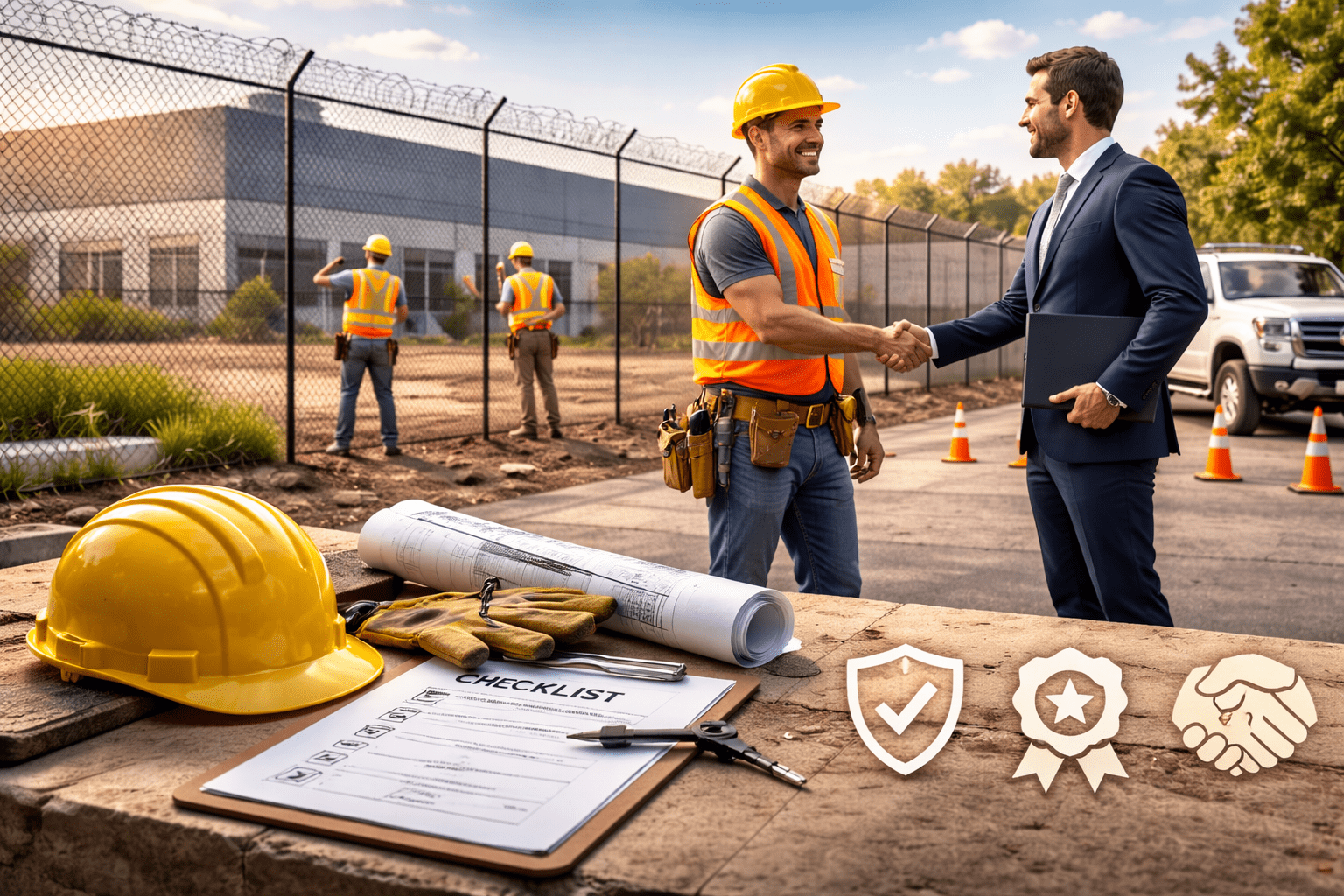
Before signing a contract, you must verify the technical and legal standing of the company. A licensed fencing contractor should be able to provide documentation of their credentials immediately upon request.
Financial Stability: Ensure the company can cash-flow large material orders without demanding 100% upfront.
Safety Records: Ask for their EMR (Experience Modification Rate) to see their history of workplace safety.
Specialized Training: Look for certifications in access control gates and automated entry systems.
Licensed vs. Unlicensed Fence Contractors: What’s the Risk?
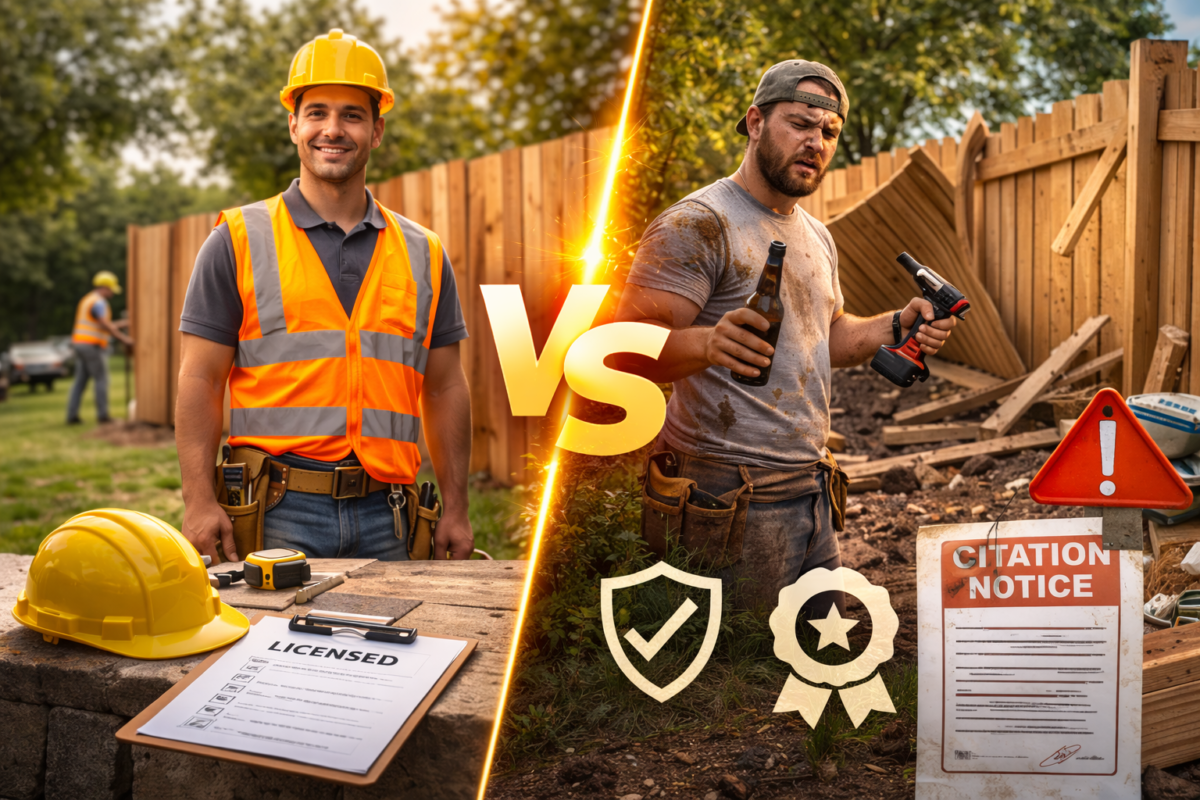
Hiring an unlicensed individual might save a few dollars initially, but the long-term risks to your business are enormous. An insured fence company protects you from the following:
Liability and Worker’s Compensation
If an uninsured worker is injured on your business property, your company could be held liable for medical bills and lost wages. A professional contractor carries comprehensive general liability and worker’s compensation insurance to shield you from these costs, just as they would ensure proper safety standards when choosing railings for split level home exteriors or handling other structural installations.
Permitting and Compliance
Professional contractors understand the local building permit process. An unlicensed installer might bypass these, leading to fines or orders from the city to tear down a non-compliant structure. Working with an expert fence installation team ensures that your project meets all legal codes from day one.
Types of Commercial Fencing Services to Look For
Your contractor should offer a diverse range of products tailored to different industries. Depending on your facility, you might need:
High-Security Solutions
For warehouses and utility sites, commercial chain-link fencing is a standard. However, for high-profile corporate offices or retail centers, a decorative steel fence offers a blend of beauty and strength.
Automated EntrySystems
A modern business needs more than a manual latch. Look for contractors capable of installing access control gates and commercial gate systems that integrate with your existing security badges or cameras. This comprehensive approach to site security upgrades mirrors many of the ways to modernize your home exterior, where technology and design work together to enhance both safety and appearance.
How to Evaluate a Commercial Fence Contractor’s Portfolio
A portfolio tells the story of a contractor’s capability. When reviewing past work, don’t just look for “pretty” pictures; look for projects that match the scale of your own.
Project Variety: Have they worked on schools, data centers, or municipal parks?
Gate Complexity: Do they show experience with cantilever gates or overhead track systems?
Material Quality: Look for signs of sagging or rust in older projects, which could indicate poor material choice or installation.
If you are looking for inspiration for your own site, you can view our custom residential fence options for aesthetic ideas or check our commercial gallery for heavy-duty builds.
Questions to Ask Before Hiring a Commercial Fence Contractor
To gauge the level of fence project management you can expect, ask these specific questions during the bidding process:
Who will be the on-site supervisor? Knowing you have a dedicated point of contact is essential for communication.
How do you handle underground utility strikes? A reliable company uses GPR (Ground Penetrating Radar) or “Call Before You Dig” services.
What is the timeline for completion? Commercial projects are often tied to strict deadlines.
Do you offer commercial fence repair? Even the best fence might need maintenance after a vehicle strike or extreme weather.
How to Choose the Right Commercial Fence Contractor for Long-Term Value
The lowest bid is rarely the best value. To achieve a high return on investment, focus on “Total Cost of Ownership.” This includes the initial price plus the cost of maintenance over 10–20 years.
A local commercial fencing company like Pro Fence & Railing adds value because we understand the local climate and soil conditions. We know which coatings will withstand the regional weather and which foundation depths are required to prevent frost heave. Choosing professional fence installation services means you won’t have to replace your perimeter in five years due to “shortcut” construction methods.
FAQ
What does a commercial fence contractor typically charge?
Pricing varies widely based on linear footage and materials. Chain link is the most cost-effective, while ornamental steel and automated gate systems represent a higher investment due to material weight and tech integration. Safety features must also meet proper building standards, including compliance with stair handrail height requirements when railings or elevated structures are involved.
How do I choose the best commercial fence contractor?
Look for a combination of a solid portfolio, proper licensing/insurance, and a clear understanding of your specific security requirements.
What certifications should a commercial fence contractor have?
They should hold a valid state contractor’s license, specialized certifications for gate automation (like UL 325 compliance), and high-limit liability insurance.
How long does commercial fence installation take?
A standard project can take anywhere from a few days to several weeks, depending on the length of the perimeter and the complexity of the gate systems.
What types of fencing are best for commercial properties?
Chain link is best for utility; steel or aluminum is best for high-end commercial curb appeal; and privacy slats or wood are used for screening dumpsters or loading docks.
Do commercial fence contractors handle permits?
Yes, a professional contractor will typically manage the municipal fencing regulations and permit applications as part of their fence project management service.
What is the difference between residential and commercial fencing?
Commercial fencing uses thicker gauges of metal, larger post diameters, and more robust hardware to withstand heavy use and potential security threats.
Can a commercial fence contractor install security gates?
Yes, most specialize in commercial gate systems, including slide gates, swing gates, and vertical lift gates with access control.
How important is insurance when hiring a fence contractor?
It is vital. Without it, the property owner assumes the risk for injuries or property damage that occurs during the installation.
What should be included in a commercial fencing contract?
It should include a detailed scope of work, material specifications, start and end dates, payment schedules, and warranty information.
Conclusion
Securing your business requires more than just a barrier; it requires a strategic partnership with a professional who understands the nuances of industrial fence installation and site safety. By prioritizing a licensed fencing contractor and an insured fence company, you protect your investment from both physical intruders and legal liabilities—similar to the added protection and convenience seen in the benefits of automatic driveway gates for residential properties.
At Pro Fence & Railing, we pride ourselves on delivering top-tier perimeter security and professional craftsmanship. Whether you need a simple commercial chain-link fencing solution or complex access control gates, our team can design systems similar to advanced vehicle access control systems for commercial properties. Contact Pro Fence & Railing today to schedule a consultation with a trusted commercial fence contractor.



 Residential Fencing
 Ornamental / Decorative Fence
 Fence Installation
 Handrails
 Photo Gallery
 Testimonials
 Blog
Blog Case Studies
 Coupons
 Financing