🇺🇸 Veteran-Owned & Operated: Integrity You Can Trust
📍 Experts in Fencing on Pittsburgh’s Hills & Slopes
📅 Free On-Site Consultation – Honest Pricing, No Pressure
🚛 Daily Installs in Bethel Park, Washington & Coraopolis
🛠️ Custom Stick-Built Fencing: No Pre-Made Panels!
✨ Maintenance-Free Vinyl: Never Paint or Stain Again!
🪜 Secure Handrails: Safety for Your Porch & Stairs
❄️ Built Tough to Withstand PA Winters & High Winds
🇺🇸 Veteran-Owned & Operated: Integrity You Can Trust
📍 Experts in Fencing on Pittsburgh’s Hills & Slopes
📅 Free On-Site Consultation – Honest Pricing, No Pressure
🚛 Daily Installs in Bethel Park, Washington & Coraopolis
🛠️ Custom Stick-Built Fencing: No Pre-Made Panels!
✨ Maintenance-Free Vinyl: Never Paint or Stain Again!
🪜 Secure Handrails: Safety for Your Porch & Stairs
❄️ Built Tough to Withstand PA Winters & High Winds
🇺🇸 Veteran-Owned & Operated: Integrity You Can Trust
📍 Experts in Fencing on Pittsburgh’s Hills & Slopes
📅 Free On-Site Consultation – Honest Pricing, No Pressure
🚛 Daily Installs in Bethel Park, Washington & Coraopolis
🛠️ Custom Stick-Built Fencing: No Pre-Made Panels!
✨ Maintenance-Free Vinyl: Never Paint or Stain Again!
🪜 Secure Handrails: Safety for Your Porch & Stairs
❄️ Built Tough to Withstand PA Winters & High Winds
🇺🇸 Veteran-Owned & Operated: Integrity You Can Trust
📍 Experts in Fencing on Pittsburgh’s Hills & Slopes
📅 Free On-Site Consultation – Honest Pricing, No Pressure
🚛 Daily Installs in Bethel Park, Washington & Coraopolis
🛠️ Custom Stick-Built Fencing: No Pre-Made Panels!
✨ Maintenance-Free Vinyl: Never Paint or Stain Again!
🪜 Secure Handrails: Safety for Your Porch & Stairs
❄️ Built Tough to Withstand PA Winters & High Winds
Deciding when to prioritize a wood fence replacement is a major milestone for any homeowner looking to maintain their property’s curb appeal and security. A leaning or graying fence can quickly become a safety hazard for pets and a liability during high-wind storms. Understanding your fencing lifecycle helps you budget effectively and avoid emergency costs from a sudden collapse. In this guide, we break down the signs of structural failure, compare fence repair vs. replacement costs, help you navigate local building codes, and tackle issues like a termite-damaged fence before they escalate.
How Long Does a Wood Fence Typically Last?
When discussing wooden fence lifespan, not all timber is created equal. On average, a well-maintained wood fence lasts between 15 and 20 years, though this fluctuates based on wood species and regional climate. According to Forbes Home, cedar and redwood are naturally rot-resistant and tend to last longer, while untreated pine may show decay in as little as five to seven years when in constant contact with moist soil. For maximum value, prioritize long-lasting fence materials like pressure-treated lumber or high-grade western red cedar, and understand how long professional fence installation takes when planning your replacement project.
Factors that impact durability include:
Soil Moisture: Fences in damp, shaded areas rot faster than those in sunny, well-drained spots.
Maintenance: Regular staining or sealing every 2–3 years can nearly double the life of the wood.
Installation Quality: Proper drainage around the posts prevents “post rot,” which is the leading cause of premature failure.
Seasonal Timing: When Is the Best Time to Replace a Wood Fence?
Most homeowners wait until spring to think about wood fence replacement, but late autumn and winter are often the smarter choice. Off-season scheduling means contractors have more availability, and you are likely to receive a more competitive fencing cost estimate due to lower demand. Spring and summer are peak seasons for Pro Fence & Railing, so wait times can stretch considerably. Winter installations also keep your landscaping dormant, protecting garden beds from foot traffic. Just confirm the ground is not frozen solid, as this makes digging post holes significantly more labor-intensive something experienced teams handling fence installation in Beaver Falls are well-equipped to manage efficiently.
Repair vs. Replacement: How to Decide
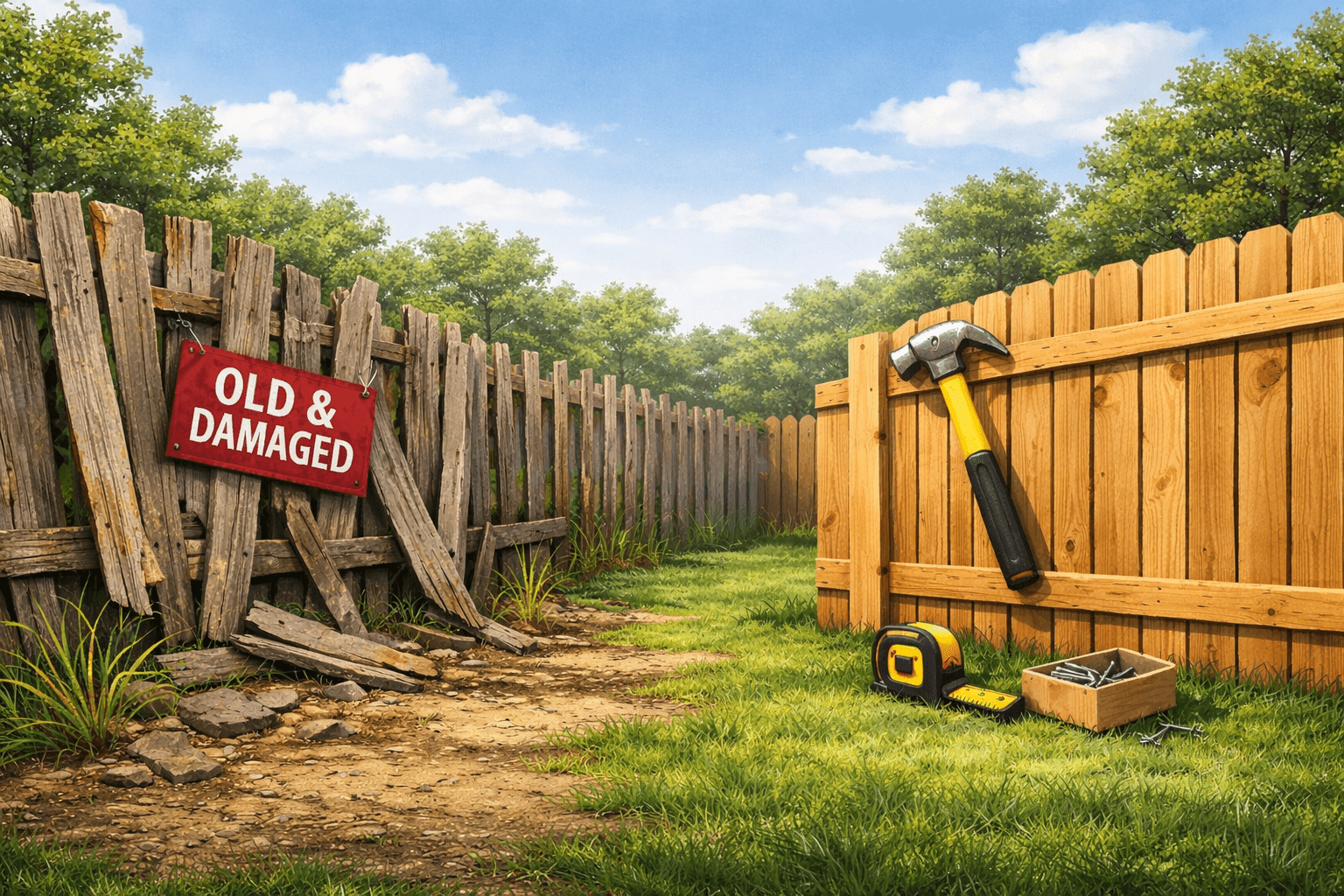
It can be tempting to keep patching up old boards to save money, but at a certain point, repairs become a “sunk cost.” A good rule of thumb shared by Angi is the 20% rule: If more than 20% of your fence panels or posts are damaged, a full replacement is usually more cost-effective in the long run. Many homeowners planning larger exterior upgrades also consider improvements such as gate operator installation in Pittsburgh for added convenience and security.
Use this fence inspection checklist to evaluate your current structure:
Leaning Posts: If several posts are wobbly, the underground footings have likely failed.
Extensive Rot: Soft, crumbly wood at the base of the boards indicates a total loss of structural integrity.
Widespread Insect Damage: A termite-damaged fence is often hollowed out from the inside, making it impossible to secure new hardware.
Broken Hardware: When nails are pulling out and hinges are sagging across the entire line, the wood can no longer hold fasteners.
While a simple fence panel replacement can fix a tree limb’s impact, it won’t fix a failing foundation. If you’re tired of constant maintenance, you might even perform a vinyl vs. wood fence comparison to see if a low-maintenance material fits your lifestyle better. Homeowners upgrading multiple exterior features sometimes also explore services like handrail installation in Pittsburgh to improve both safety and curb appeal.
Benefits of Replacing an Old Backyard Fence
A fresh fence does more than just mark a property boundary fencing line; it fundamentally changes how you use your outdoor space. Beyond the obvious aesthetic boost, a new fence provides:
Enhanced Security: A sturdy fence keeps unwanted intruders out and ensures that children and pets stay safely within the yard.
Noise Reduction: Solid wood panels act as a sound barrier against street traffic and noisy neighbors.
Sustainability: By choosing FSC-certified wood, as recommended by the U.S. Green Building Council, you ensure your project supports responsible forest management.
Permits, HOA Rules, and Local Building Codes to Consider
Before you dig, research your local fence permit requirements thoroughly. Every municipality differs, and non-compliance can result in fines or forced removal. HOAs may also impose strict rules on fence height, color, and style, which is why many property owners benefit from guidance on choosing a reliable commercial fence contractor who understands local regulations.
Standard regulations often include:
Height Limits: Most residential areas cap backyard fences at 6 feet and front yard fences at 4 feet.
Setbacks: You must ensure the fence is within your property line and doesn’t encroach on public easements.
The “Good” Side: Many local codes require the “finished” side of the fence to face your neighbors.
How to Prepare Your Backyard for Fence Replacement
Once you’ve signed your contract, a little preparation goes a long way in ensuring a smooth installation day. Your crew will need clear access to the entire perimeter.
Clear the Line: Remove debris, potted plants, and lawn furniture at least 3 feet away from the fence.
Trim Vegetation: Cut back overhanging branches or thick ivy that might interfere with the fence post replacement process.
Locate Utilities: While your contractor should call “811” to mark underground lines, it helps to know where your private irrigation lines are.
Communicate with Neighbors: It’s a courtesy to let your neighbors know when the work will begin, especially if you share a property line.
By taking these steps, you ensure the team can focus on delivering a high-quality, durable result. To learn more about our process, feel free to meet our professional railing specialists who bring years of craftsmanship to every project.
Frequently Asked Questions
How often should you replace a wood fence?
Most wood fences require replacement every 15 to 20 years, depending on the wood type and local climate.
What are the signs you need wood fence replacement?
Key signs include leaning posts, widespread rot, holes from wood-boring insects, and boards that are splintering or warping beyond repair.
Is it better to repair or replace a damaged wood fence?
Repairing is best for isolated damage (like one broken board). Replacement is better if the structural posts are rotting or if more than 20% of the fence is failing.
How long does a pressure-treated wood fence last?
According to Consumer Reports, pressure-treated pine can last 15–20 years or more if it is regularly cleaned and sealed to prevent moisture intrusion.
What time of year is best for fence replacement?
Late fall or winter is often the best time due to lower contractor demand and dormant landscaping, which minimizes garden damage.
Does homeowners insurance cover fence replacement?
Insurance typically covers “sudden and accidental” damage (like a fallen tree or windstorm) but does not cover general wear, tear, or rot.
Can I replace just a section of my wood fence?
Yes, a fence panel replacement is possible if the rest of the structure is sound, though the new wood may not perfectly match the weathered color of the old sections.
Do I need a permit for wood fence replacement?
In most jurisdictions, yes. Requirements vary by height and location, so always check with your local building department.
How long does fence replacement take?
A standard residential backyard fence typically takes 2 to 4 days to complete, depending on the size of the yard and the soil conditions.
What type of wood lasts longest for backyard fences?
Cedar, Redwood, and Ipe are the longest-lasting natural woods, while pressure-treated lumber is the most durable budget-friendly option.
Ready for a Backyard Transformation?
Your fence is the frame for your entire outdoor life. Don’t wait for a storm to decide it’s time for an upgrade. At Pro Fence & Railing, we combine premium materials with expert craftsmanship to build fences that stand the test of time.
If you’re ready to enhance your home’s privacy and value, contact us today for an on-site consultation and a detailed quote. Our team is here to ensure your next project is a seamless, professional wood fence replacement, and we can also advise on related upgrades such as exterior railing options for split level homes when improving the overall safety and appearance of your property.




 Residential Fencing
 Ornamental / Decorative Fence
 Fence Installation
 Handrails
 Photo Gallery
 Testimonials
 Blog
Blog Case Studies
 Coupons
 Financing