Key Takeaways
- Stair railings provide support and improve stability.
- Proper railing height and placement can reduce fall risks.
- The right material should suit your stairs and outdoor conditions.
- Professional installation helps create a secure, long-lasting railing.
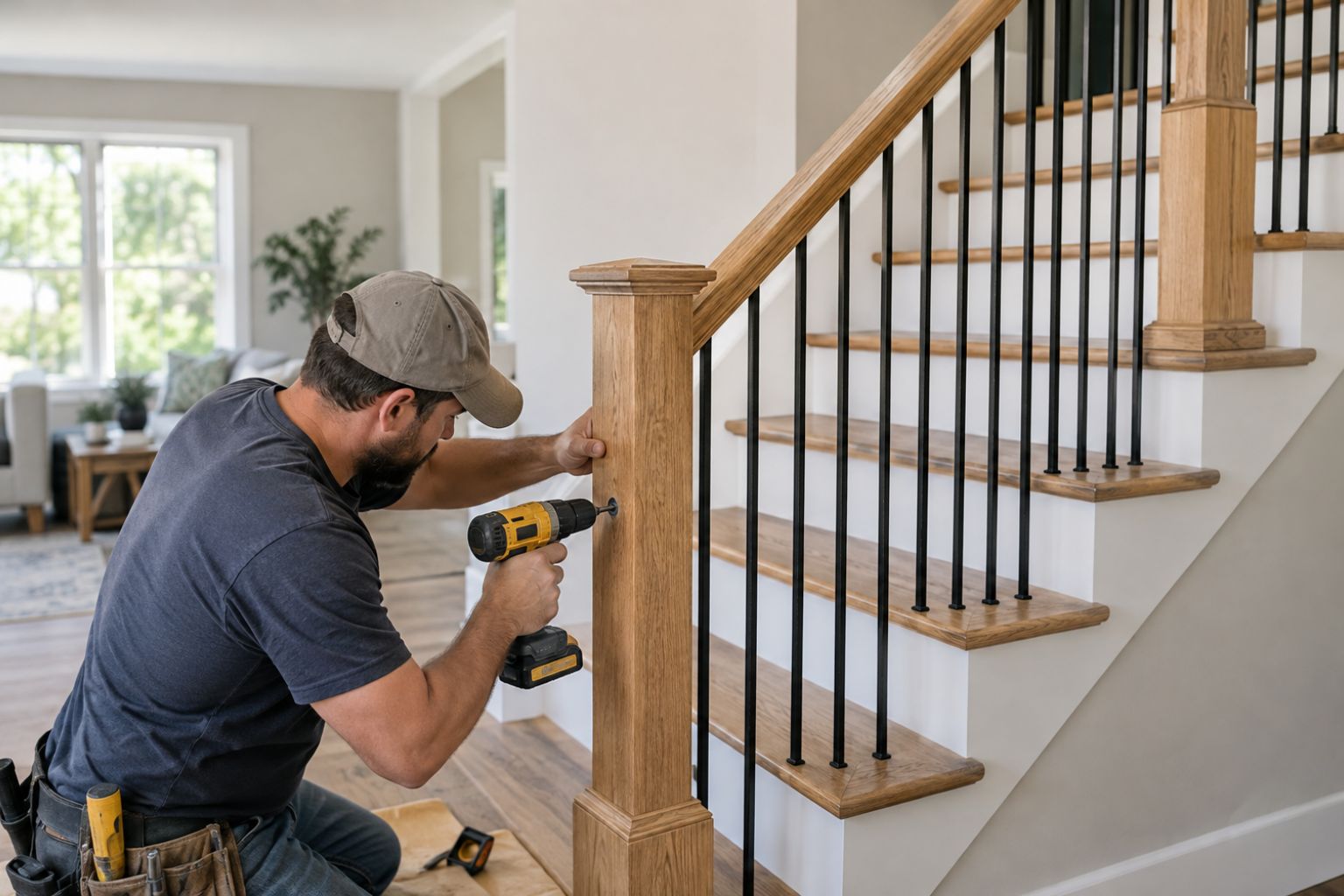
You probably don’t think much about your stairs until you need to catch yourself. A railing gives you something to grab when a step feels slippery, you’re carrying something, or your balance is off. Installing stair railing can make everyday trips up and down the stairs feel more secure, while also giving the area a more finished appearance.
How Does Stair Railing Improve Safety?
A railing gives you something secure to hold when climbing or descending stairs. It can provide extra balance when steps are wet, slippery, uneven, or difficult to navigate.
A properly installed stair railing can help:
- Improve balance and stability
- Provide support when using stairs
- Reduce the chance of losing balance
- Make stairs easier to navigate
- Add an extra layer of safety for outdoor steps
These benefits make a secure handrail especially useful on porches, decks, ramps, and exterior stairways.
What Makes a Stair Railing Safe?
Safety depends on more than simply having a railing attached to the stairs. Its height, placement, strength, and overall condition all affect how useful it is.
When installing stair railing, consider:
- Proper railing height
- Secure attachment points
- Comfortable hand clearance
- Consistent placement along the stairs
- A design that is easy to grip
The railing should feel stable when used and remain firmly attached instead of shifting under pressure.
Which Materials Work Well for Stair Railings?
The material you choose affects the railing’s appearance, maintenance, and ability to handle outdoor conditions. Common options include aluminum handrails and vinyl railings. Aluminum can provide a clean, durable appearance, while vinyl offers a low-maintenance option for many residential applications.
The best material should fit your home’s exterior, the location of the stairs, and the amount of maintenance you want to handle.
How Does Proper Railing Placement Affect Stair Safety?
Where a railing is installed can make a noticeable difference in how easily people can use it. A railing that is too high, too low, or awkwardly positioned may not provide the support you expect.
During installing stair railing, attention should be given to:
- Stair layout and direction
- Railing height
- Distance from the steps
- Starting and ending points
- Secure mounting locations
For more guidance, see this resource on stair handrail height for safety and code compliance.
When Should You Replace an Existing Stair Railing?
An old railing does not always need to be replaced simply because it looks dated. The bigger concern is whether it still provides reliable support.
Consider replacing a railing if you notice:
- Loose or unstable sections
- Rust or visible deterioration
- Cracks or damage
- Incorrect height or placement
- Difficulty getting a secure grip
- Mounting points that no longer feel strong
If a railing moves when you use it, it deserves attention. Small stability issues can become bigger safety concerns over time.
Why Choose Professional Stair Railing Installation?
Installing a railing correctly requires more than attaching it to the nearest surface. The installer needs to account for the stair structure, mounting points, railing height, and overall layout.
Professional installing stair railing services can help ensure:
- Strong mounting
- Proper positioning
- Suitable materials
- Clean installation
- Better long-term stability
Professional installation can also help make sure the finished railing works with the existing stairs rather than creating awkward gaps or placement issues.
FAQs About Installing Stair Railing
Why do stairs need a railing?
Railings provide support and help people maintain balance while using stairs. They can be especially useful on exterior and frequently used stairways.
What is the best material for outdoor stair railings?
Aluminum and vinyl are popular low-maintenance options for outdoor applications. The right material depends on the location, design, and maintenance needs.
How high should a stair railing be?
Railing height depends on the stair configuration and applicable building requirements. The installation should follow the requirements that apply to the property.
Can stair railings be installed on concrete steps?
Yes. Railings can be installed on concrete steps when appropriate mounting methods and hardware are used.
How do I know if my existing railing is unsafe?
Movement, loose connections, damage, deterioration, or poor placement can indicate that a railing needs attention.
Can a railing improve the appearance of my stairs?
Yes. A well-designed railing can provide both practical support and a cleaner, more finished look.
Ready to Improve Your Stair Safety?
Installing stair railing can make stairs easier and safer to use while adding a finished look to your property. Proper materials, placement, and secure installation all contribute to a railing that performs well over time.
Ready to discuss your stair railing project? Call Pro Fence and Railing at 724-249-6389 to schedule a consultation.



 Residential Fencing
 Ornamental / Decorative Fence
 Fence Installation
 Handrails
 Photo Gallery
 Testimonials
 Blog
Blog Case Studies
 Coupons
 Financing