🇺🇸 Veteran-Owned & Operated: Integrity You Can Trust
📍 Experts in Fencing on Pittsburgh’s Hills & Slopes
📅 Free On-Site Consultation – Honest Pricing, No Pressure
🚛 Daily Installs in Bethel Park, Washington & Coraopolis
🛠️ Custom Stick-Built Fencing: No Pre-Made Panels!
✨ Maintenance-Free Vinyl: Never Paint or Stain Again!
🪜 Secure Handrails: Safety for Your Porch & Stairs
❄️ Built Tough to Withstand PA Winters & High Winds
🇺🇸 Veteran-Owned & Operated: Integrity You Can Trust
📍 Experts in Fencing on Pittsburgh’s Hills & Slopes
📅 Free On-Site Consultation – Honest Pricing, No Pressure
🚛 Daily Installs in Bethel Park, Washington & Coraopolis
🛠️ Custom Stick-Built Fencing: No Pre-Made Panels!
✨ Maintenance-Free Vinyl: Never Paint or Stain Again!
🪜 Secure Handrails: Safety for Your Porch & Stairs
❄️ Built Tough to Withstand PA Winters & High Winds
🇺🇸 Veteran-Owned & Operated: Integrity You Can Trust
📍 Experts in Fencing on Pittsburgh’s Hills & Slopes
📅 Free On-Site Consultation – Honest Pricing, No Pressure
🚛 Daily Installs in Bethel Park, Washington & Coraopolis
🛠️ Custom Stick-Built Fencing: No Pre-Made Panels!
✨ Maintenance-Free Vinyl: Never Paint or Stain Again!
🪜 Secure Handrails: Safety for Your Porch & Stairs
❄️ Built Tough to Withstand PA Winters & High Winds
🇺🇸 Veteran-Owned & Operated: Integrity You Can Trust
📍 Experts in Fencing on Pittsburgh’s Hills & Slopes
📅 Free On-Site Consultation – Honest Pricing, No Pressure
🚛 Daily Installs in Bethel Park, Washington & Coraopolis
🛠️ Custom Stick-Built Fencing: No Pre-Made Panels!
✨ Maintenance-Free Vinyl: Never Paint or Stain Again!
🪜 Secure Handrails: Safety for Your Porch & Stairs
❄️ Built Tough to Withstand PA Winters & High Winds
Understanding the standard deck railing height is the first step in ensuring your commercial property remains safe and legally compliant. For facility managers and contractors, these measurements are not merely suggestions. They are rigorous safety standards designed to prevent accidents and mitigate liability. Whether you are managing an outdoor dining area, a multi-family complex, or a corporate plaza, the precision of your deck safety railing measurements defines the integrity of your site. Consider Quality fence installation in New Brighton, PA for the best results in securing your property and meeting code compliance.
What Is the Standard Deck Railing Height for Residential Decks?
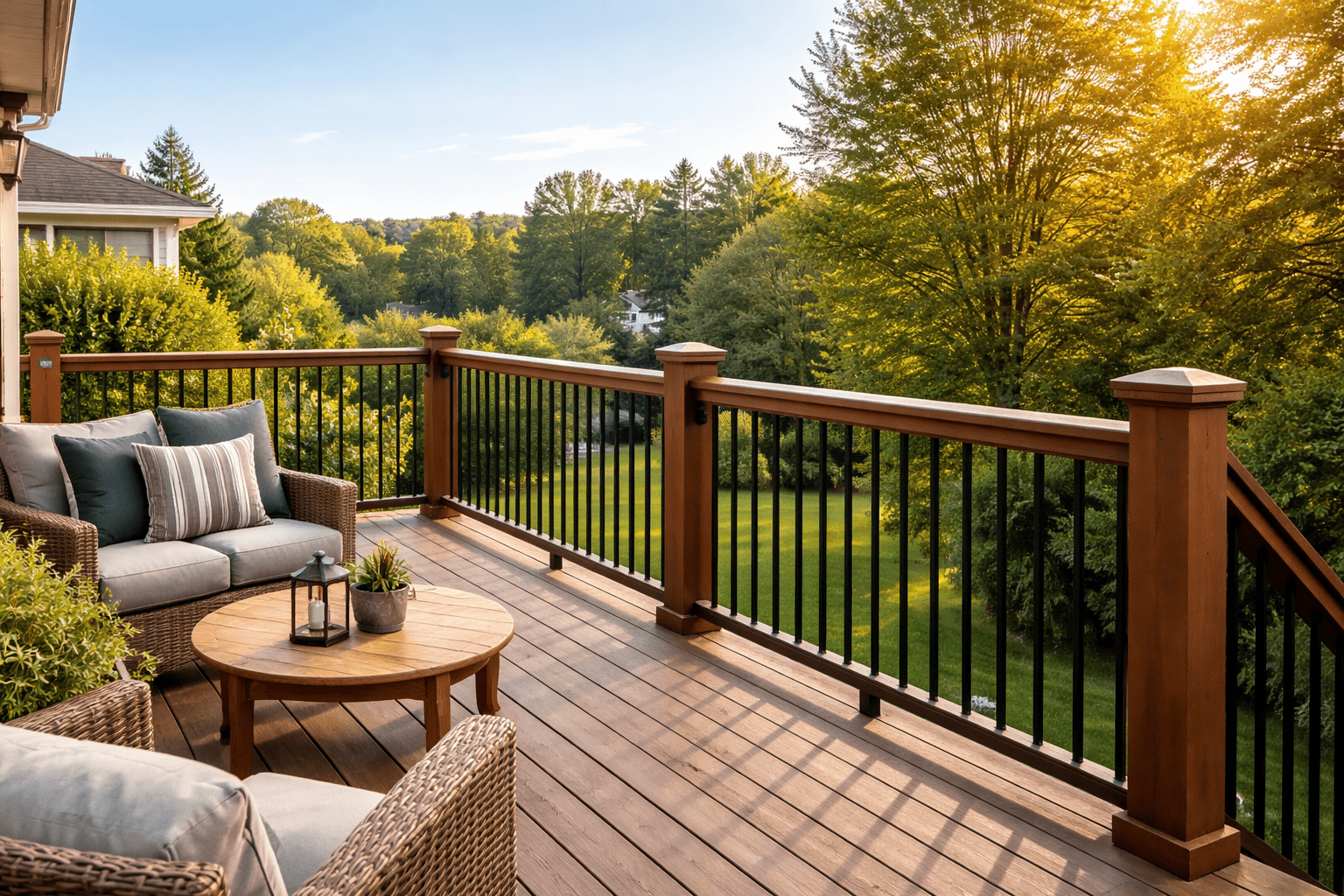
In the world of residential construction, the International Residential Code (IRC) typically mandates a minimum height of 36 inches for guards. While this is sufficient for single-family homes, commercial property owners must recognize that these standards often fall short of commercial requirements. Use the residential deck railing height only as a baseline comparison. Commercial environments demand more robust guardrail systems to accommodate higher foot traffic and diverse user groups. For Expert handrail installation near Beaver, make sure your installation meets the higher standards required for commercial spaces.
Importance of Proper Deck Railing Height for Fall Protection
The primary role of any outdoor railing safety standards implementation is fall protection. On a commercial job site or property, a railing that is too low creates a pivot point that can actually increase the risk of a fall during a trip. High-quality deck fall protection systems ensure that the center of gravity for most adults remains well below the top rail. Pro Fence & Railing prioritizes these physics-based safety measures to ensure every installation provides a secure perimeter for employees and the public. To Secure your property with automatic gate operators, you can complement your safety measures with advanced gate automation for added convenience and security.
Minimum Deck Railing Height Requirements for Safety
To maintain exterior railing compliance, most jurisdictions following the International Building Code (IBC) require a minimum height of 42 inches for commercial guards. This height is measured from the leading edge of the tread or the finished floor surface to the top of the rail. Beyond height, you must also consider the load-bearing capacity of the system. Commercial railings must withstand a concentrated load of 200 pounds applied in any direction at the top of the rail to ensure the structure does not fail under pressure. For Expert fence installation services in Cranberry Township, ensure you follow these standards for maximum safety.
Differences Between Residential and Commercial Railing Heights
The gap between a 36-inch residential rail and a 42-inch commercial rail exists because of the different risks associated with public spaces. Commercial building code deck railing is stricter because the owner is responsible for the safety of diverse populations, including children and the elderly. While a home might use lighter railing balusters, a commercial property requires industrial-grade materials that meet stringent guardrail height regulations. Understanding these differences is vital for any handrail installation project to avoid costly teardowns and rebuilds. Make sure to choose Choosing outdoor handrail brackets that comply with commercial standards for maximum safety.
Deck Railing Height for Stairs vs. Flat Surfaces
Navigating stair railing height guidelines requires a distinction between a guard and a handrail. On flat surfaces, the guardrail height must remain at least 42 inches. However, for stair design, a handrail vs. guardrail height conflict often arises. The handrail—the part you grip—must typically be between 34 and 38 inches high. In many commercial settings, you will see a transition where the guard stays at 42 inches while a separate handrail is mounted at the lower, code-compliant height to assist with mobility. Consider installing Automatic gate operators for your Cranberry Township home for added security and convenience, especially in commercial or residential setups requiring high-traffic access.
Common Mistakes in Deck Railing Height Installation
One frequent error is failing to account for the final flooring thickness during deck framing. If you measure 42 inches from the subfloor but then add an inch of decking material, your finished safe railing height outdoors will be non-compliant. Another mistake involves the spacing of railing balusters. Codes generally state that a 4-inch sphere must not be able to pass through any opening. Neglecting these fine details can lead to failed inspections and increased insurance premiums for your business.
How Deck Height Affects Railing Requirements
The necessity of a railing is often determined by the railing height for elevated decks relative to the ground. Typically, any commercial deck surface that is more than 30 inches above the grade requires a certified guardrail system. However, even if a deck is lower than 30 inches, many facility managers choose to install railings to direct foot traffic and enhance outdoor railing safety standards. For any elevated platform, the precision of your height measurement is the difference between a secure environment and a significant safety hazard. For Professional fence installations in Bethel Park, you can ensure your property complies with safety guidelines while improving its aesthetic.
How to Measure Deck Railing Height Correctly
To achieve accurate deck safety railing measurements, always measure from the highest point of the finished floor surface. If you are installing on a slope or stairs, measure vertically from the leading edge of the stair nosing. Ensure your handrail systems are consistent in height across the entire perimeter. Understanding Why businesses need custom fences can help you design an exterior that meets both safety and aesthetic standards, contributing to the overall look and feel of your commercial property.
Frequently Asked Questions
What is the standard deck railing height for residential properties?
The standard for residential homes is usually 36 inches, though some local codes may require higher. For added convenience and value, consider Automatic gate openers for added value, which can seamlessly integrate with your property’s safety and accessibility needs.
How high should a deck railing be to meet safety codes?
For commercial properties, the International Building Code generally requires a minimum height of 42 inches.
Are deck railing height requirements the same for stairs and decks?
No. Flat deck areas require 42-inch guards, while stair handrails must be between 34 and 38 inches high. This ensures that every deck and stair system is up to code. By installing Enhance security with gate automation, you can also add another layer of protection to your residential or commercial property.
What happens if deck railing height does not meet code?
Non-compliance can result in heavy fines, failed building inspections, and significant legal liability in the event of an accident. Consider the Pool slide handrail replacement benefits to ensure safety around your pool area and avoid liability issues.
How do I measure deck railing height correctly?
Measure vertically from the finished deck boards to the top of the upper rail. Do not measure from the joists or subflooring.
Do building codes vary for deck railing height by location?
Yes. While most follow the IBC or IRC, local municipal amendments can dictate stricter requirements.
What is the difference between guardrail height and handrail height?
A guardrail is a safety barrier at 42 inches to prevent falls. A handrail is a graspable surface at 34 to 38 inches to provide guidance on stairs.
Why is deck railing height important for outdoor safety?
Proper height prevents the body from toppling over the rail and ensures the barrier is tall enough to protect all users.
Are there different railing height rules for commercial properties?
Yes. Commercial properties must adhere to higher safety thresholds, typically requiring 42-inch railings compared to 36-inch residential ones.
What are common mistakes when installing deck railings?
Common errors include measuring from the wrong floor point, using insufficient fasteners, and ignoring local code variations. To avoid such mistakes, it’s crucial to invest in professional DIY vs professional fence installation, ensuring your project is completed correctly the first time with the highest standards.
Conclusion
Maintaining a safe commercial environment starts with expert installation and code knowledge. If you are managing a project in Western Pennsylvania, we offer specialized handrail installation Beaver Falls services and handrail installation Beaver Falls for the Pittsburgh area. Do not leave your property safety to chance. Contact us today to request a free estimate and ensure your facility meets every standard deck railing height.




 Residential Fencing
 Ornamental / Decorative Fence
 Fence Installation
 Handrails
 Photo Gallery
 Testimonials
 Blog
Blog Case Studies
 Coupons
 Financing