A pool fence is more than a boundary around your pool. Pool fence installation should create a reliable barrier, meet applicable safety requirements, and work with the shape of your property.
That last part can be easy to overlook in Pittsburgh. Sloped yards, decks, landscaping, and tight backyard layouts can affect where a fence can go and how it needs to follow the ground. The material matters too, but a good fence starts with the right layout.
Quick Takeaways
Pool fencing needs to restrict unintended access while fitting the property properly. Aluminum, vinyl, and chain link are all options, but the best choice depends on visibility, privacy, maintenance, terrain, and local requirements.
What Are the Pool Fence Rules in Pittsburgh?
There is not one universal rule for every Pittsburgh-area property. Pennsylvania’s Uniform Construction Code requires residential swimming pools to comply with the applicable International Swimming Pool and Spa Code, while municipalities may have additional requirements.
Depending on the property, requirements can address:
- Barrier height
- Gaps and openings
- Gate construction
- Self-closing and self-latching gates
- Pool and property layout
- Permits or inspections
Do not assume a four-foot fence automatically meets pool requirements. The entire barrier and gate setup need to be considered.
Which Materials Work Best for Pool Fencing?
There is no single material that works for every pool. The right choice depends on how much visibility, privacy, and maintenance you want, along with the shape of your property.
Aluminum Fencing
Best for: Visibility and low maintenance
- Open sightlines: You can see into the pool area more easily.
- Low maintenance: Aluminum does not require regular painting or staining.
- Sloped properties: The layout can be adjusted to follow changes in the ground.
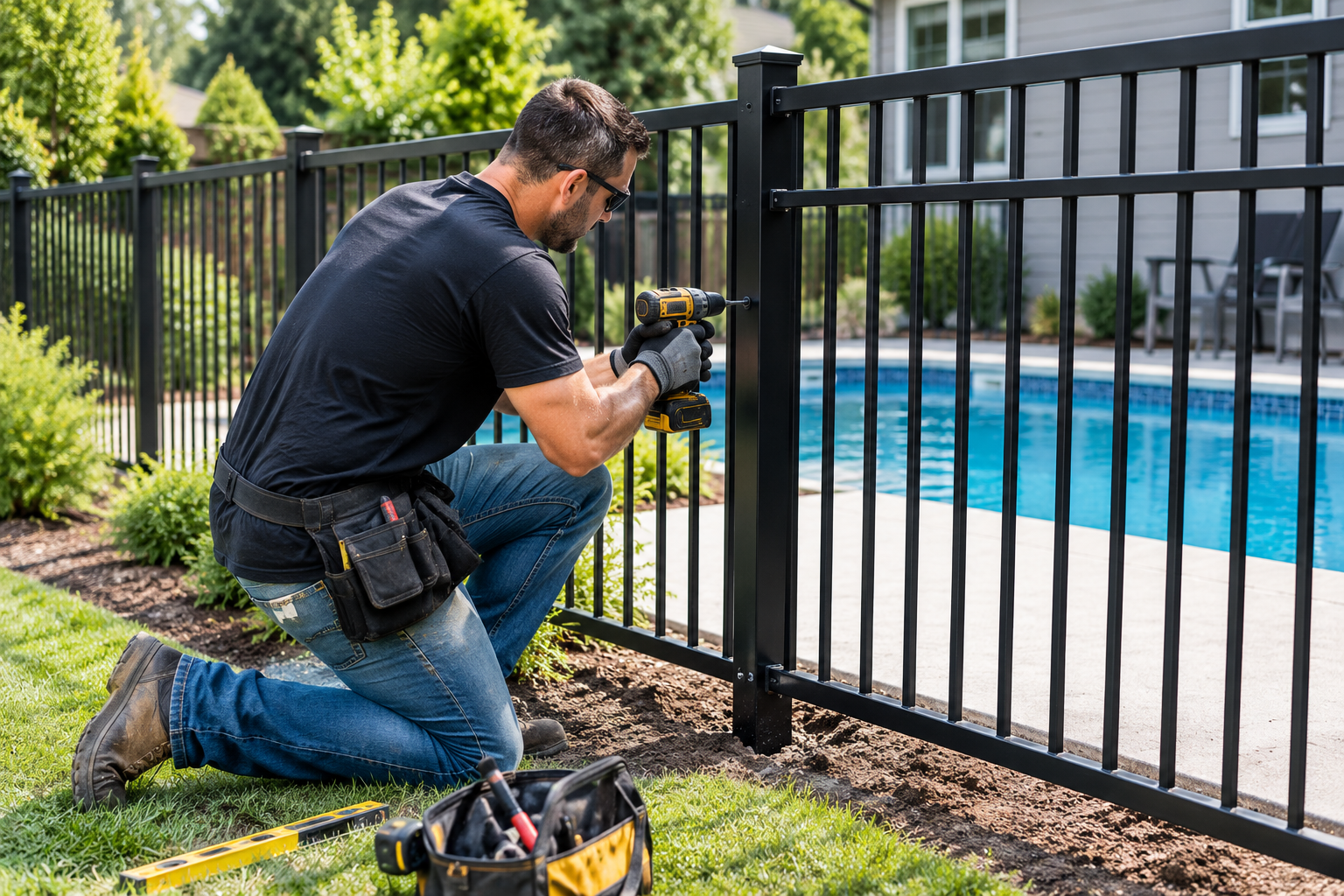
- Pool use: Pro Fence & Railing installs aluminum fencing for pool areas. Aluminum fencing can provide an ornamental appearance while creating a defined barrier.
Wood Privacy Fencing
Best for: A natural look with solid privacy
- Natural appearance: Wood gives the pool area a warm, classic look that blends well with landscaping and older Pittsburgh-area homes.
- Privacy: Solid wood panels block the view into the pool area more completely than aluminum or chain link.
- Custom options: Wood can be cut and shaped on-site to follow uneven terrain, which matters on Pittsburgh’s sloped properties.
- Pool use: Pro Fence & Railing has installed wood fencing around pool areas. Cedar and pressure-treated pine are common choices because both hold up well against moisture and outdoor conditions.
Vinyl Fencing
Best for: Privacy and a more enclosed pool area
- More privacy: Solid designs limit the view into the pool area.
- Moisture resistance: Vinyl does not rust and does not require painting or staining.
- Design options: Different styles can give the backyard a more enclosed appearance.
- Pool use: Pro Fence & Railing has installed vinyl fencing around pool areas.
Chain Link Fencing
Best for: Practical, open enclosures
- Visibility: The open design keeps the pool area visible.
- Practical barrier: It separates the pool from the rest of the yard without blocking the view.
- Material options: Galvanized and vinyl-coated options are available.
- Pool use: Chain link can work well when privacy is not the main priority.
Why Does Installation Matter?
A pool fence can meet a basic height requirement and still have problems if the installation ignores the property.
Pittsburgh’s hills and uneven yards can create inconsistent gaps beneath a fence. A layout that works on flat ground may need a different approach when the grade changes.
Pro Fence & Railing stick-builds fences on-site instead of relying solely on pre-made panels. This allows the fence to follow the property’s terrain more closely and helps avoid awkward gaps. Residential fencing can be planned around the actual shape of the property.
What Should You Consider Before Installation?
Before choosing a material, look at the entire pool area.
Consider:
- The pool’s position relative to the house
- Changes in ground elevation
- Existing decks and patios
- Landscaping and other obstacles
- How the gate will be used
- How much visibility or privacy you want
- Local pool-barrier requirements
A fence that works beautifully in a flat yard may need a different layout on a Pittsburgh hillside.
Frequently Asked Questions
1. How tall does a pool fence need to be in Pittsburgh?
Requirements can vary by municipality and property. Pennsylvania residential pools must comply with the applicable state-adopted pool and spa code, while local rules may add requirements.
2. What is the best material for a pool fence?
There is no single best choice. Aluminum offers visibility and low maintenance, vinyl provides more privacy, and chain link creates a practical open enclosure.
3. Does a pool fence need a self-closing gate?
Many local pool ordinances require specific gate hardware, including self-closing and self-latching features. Confirm the requirements for your municipality before installation.
4. Can a pool fence follow a sloped yard?
Yes. A fence can be designed around changes in grade, but the layout needs to account for those changes so the barrier remains consistent.
5. Can my existing yard fence serve as a pool fence?
Sometimes, but not automatically. The existing fence and gates still need to meet applicable pool-barrier requirements, including rules for height, openings, and access.
Plan the Fence Around the Pool
Pool fence installation is not simply a matter of picking a material. The barrier, gate, terrain, and local requirements all need to work together.
At Pro Fence & Railing, we can help you plan a pool fence around your Pittsburgh property’s layout and fencing needs. Contact us for a free estimate and discuss the right material and installation approach for your pool area.



 Residential Fencing
 Ornamental / Decorative Fence
 Fence Installation
 Handrails
 Photo Gallery
 Testimonials
 Blog
Blog Case Studies
 Coupons
 Financing